

How Agencies Can Boost Clients' AI Visibility
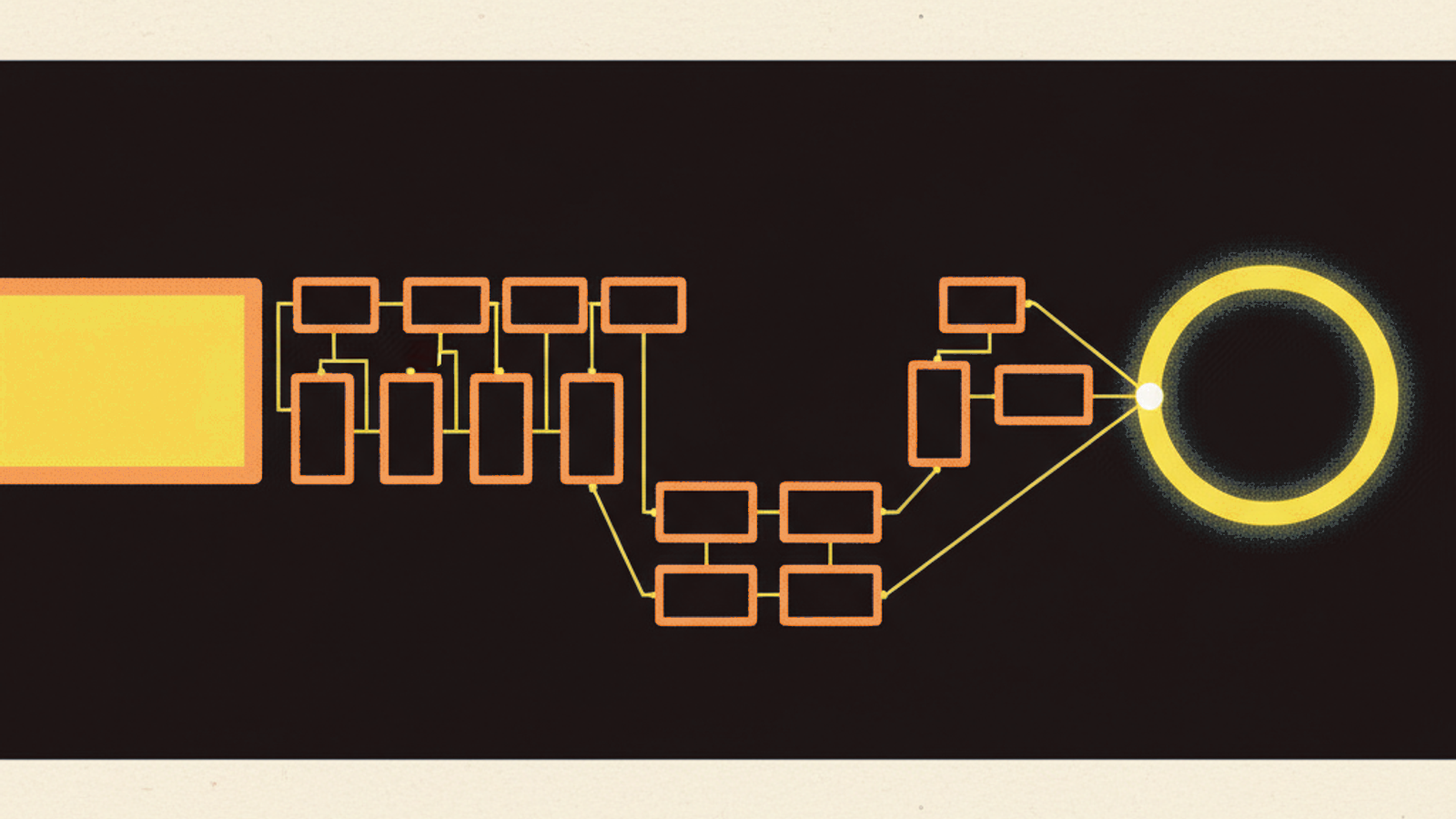
How agencies can boost clients AI visibility comes down to running a repeatable delivery loop instead of one-off tactics: define the client's business objective, map buyer questions into a frozen prompt set, measure how ChatGPT, Perplexity, Gemini, and Claude answer today, classify the gaps, assign each fix to a named owner, implement, re-measure, and report what changed in business terms. The loop — not any single tool — is what compounds.
How agencies can boost clients AI visibility: the short answer
- Treat it as delivery, not a checklist. A tool roundup or a one-time list of GEO tactics does not scale across a client roster — a documented operating loop that any account manager can run does.
- Separate measurement from execution. Software observes and diagnoses which engines name whom for which questions; people do the technical, content, entity, and reputation work that changes the answer.
- Prove movement, never promise rank. Report against a frozen baseline so a monthly review shows honest change, and never guarantee a citation or position no engine has published.
Who this is for
This is written for agency owners, GEO and SEO leads, and account managers who are being asked, "Do our clients show up in AI answers, and can you improve that?" It assumes you already deliver SEO or content and want to add AI visibility as a defensible, repeatable service line across many accounts — not run a science experiment on one brand.
What AI visibility means for an agency client
For an agency, a client's AI visibility is how often, and how accurately, AI answer engines represent that client when real buyers ask real questions. The unit is not a ranking position on a results page; it is a model-generated paragraph. When a prospect asks Perplexity "who are the best options for X," the client is either named in the answer, described accurately, and cited from a source the client controls — or it is absent, mischaracterized, or credited to a competitor.
That reframing matters because it changes what you deliver. Classic SEO asks whether a page ranks for a query. AI visibility asks whether the client is part of the synthesized answer, and how it is framed. The two overlap — the pages engines quote are often the pages that already rank — but they are not the same deliverable, and an agency that conflates them will over-promise on one and under-deliver on the other. If your client is still asking what the underlying category even is, the primer on what an AI visibility tool actually does is a useful shared starting point before a kickoff.
Three observable states are worth naming for every client, because your report and your remediation both hang off them:
- Mention — the engine names the client at all in a relevant answer.
- Recommendation — the engine names the client as an answer, not merely in passing.
- Citation — the engine links or attributes a specific source, ideally one the client owns.
Keeping these separate is the single discipline that most improves an agency's credibility, because "we got you mentioned" and "we got you recommended" are different outcomes with different work behind them.
Why one prompt or one score misleads
Two failure modes sink agency AI-visibility work before it starts. The first is running a single prompt, seeing the client absent, and declaring a crisis — or seeing the client present and declaring victory. AI answers vary by platform, model, search state, location, prompt wording, time, and repeated run. A single reading is an anecdote, not a baseline.
Measurement variability. AI answers can vary by platform, model or product, search state, location, prompt wording, time, and repeated run. Results describe a defined observation method, not a permanent universal rank.
The second failure mode is compressing everything into one "visibility score" and reporting only that number. A score is useful as a dashboard summary, but it hides the thing the client is paying you to change: which questions, on which engine, with which competitor named instead. An agency that leads with a single figure trains the client to react to noise — a one-day, one-engine swing is usually the engine's retrieval refresh, not your editorial work. The fix is to hold a fixed prompt set and read movement across refreshes, a discipline the companion guide on how to read a movement in share of citation unpacks in detail.
To be precise about the summary metric you will inevitably report: share of citation is the percentage of relevant AI answers that name the brand at least once across a defined prompt set and engine set, in a defined window. It is mention-based and backward-looking — it tells you what the engines did, not what they will do next, and no vendor, including Prime AI Visibility, can promise the next answer.
The Client AI Visibility Delivery System
The Client AI Visibility Delivery System is a nine-stage loop an agency runs per client and repeats on a cadence. It is deliberately boring: the value is that any account manager can execute it the same way, so results are comparable across accounts and across months.
- Define the business objective. Name the outcome the client cares about — qualified demos, local walk-ins, RFP shortlisting — before touching a prompt. Everything downstream is prioritized against it.
- Map personas and buyer questions. Interview the client's sales and support teams, mine internal search and ticket logs, and write the natural-language questions each persona asks an assistant across the funnel.
- Freeze the prompt set. Turn those questions into a fixed list (10–40 for a first pass), grouped by theme and funnel stage. Once frozen, do not edit it mid-cycle — a changed prompt set breaks comparability.
- Capture answers and sources. Run the frozen set across the engines your client's buyers actually use, and record the raw answer, whether the client was mentioned, recommended, or cited, which sources were named, and the exact conditions (engine, mode, date, location).
- Classify gaps. Sort each result into a gap type: no mention, mentioned but not recommended, recommended but no owned citation, factually wrong, or competitor-owned. The type dictates the fix.
- Assign a fix owner. Every gap gets a named human owner and a workstream — technical, content, entity, reputation, or conversion. Unassigned gaps do not get fixed.
- Implement. Owners do the work: the page, the schema correction, the entity clarification, the review response, the digital-PR placement. This is execution, not measurement.
- Remeasure. Re-run the same frozen prompt set under the same conditions after enough time for engines to re-crawl and re-synthesize, and compare like-for-like snapshots.
- Report the business meaning. Translate movement into the objective from stage one — not "share of citation rose four points" alone, but "the client is now recommended on the three comparison prompts that precede a demo request."
The loop's power is compounding. Each cycle produces a cleaner prompt set, a tighter gap taxonomy, and a shorter list of unresolved owners. A one-off audit gives a client a snapshot; this system gives them a trend line, which is what renews a retainer. If you want the single-brand mechanics behind stages three through five, the step-by-step AI visibility audit walkthrough is the granular companion to this agency-scale loop.
The five workstreams that actually move the answer
Gaps get assigned to one of five workstreams. Each has a different owner profile, a different tempo, and a different relationship to AI visibility. Naming them prevents the common agency mistake of treating "improve AI visibility" as one undifferentiated blob.
Technical. Crawlability, rendering, structured data accuracy, and making sure the pages engines want to quote are reachable and machine-readable. AI engines still start from the open web; Google's own guidance is explicit that strong SEO fundamentals and genuinely useful, expert content remain the foundation, and that no special AI schema or llms.txt file is required to be eligible [1]. This workstream removes friction; it rarely creates a mention by itself.
Content. Answer-shaped pages that directly resolve the buyer questions in the frozen prompt set — a clear direct answer, sourced claims, and headings that mirror how people ask. This is where most recommendations are earned, because engines synthesize from pages that answer the question cleanly. When a client leans heavily on Claude, the Claude AI visibility reporting features worth evaluating help you decide what the content work needs to move.
Entity. Making the client unambiguous to a model: consistent name, category, locations, and relationships across the site and the wider web, so the engine attributes the right facts to the right organization. Entity confusion is a frequent, invisible cause of "mentioned but wrong."
Reputation. Third-party signals — reviews, forum presence, digital PR, and the sources engines lean on when they synthesize a recommendation. This workstream is the slowest and the least directly controllable, and it is where over-promising is most dangerous.
Conversion. What happens after the answer sends a visitor. An AI referral that lands on a page that does not match the promise of the answer is a wasted win, so the conversion path is part of the deliverable, not an afterthought. Where clients need this managed end to end rather than advised, Percepture provides managed GEO execution for client campaigns that covers technical, content, entity, and reputation work under one owner.
Disclosure: Prime AI Visibility and Percepture have a commercial relationship. Prime provides visibility intelligence and diagnosis; Percepture provides managed implementation. Recommendations and comparisons use the criteria shown on this page.
A 30/60/90-day delivery plan
The delivery system is a loop; the first three cycles have a predictable shape. Use this as a template you adapt per client, not a promise of specific results.
Days 1–30 — Baseline and quick wins. Complete stages one through six for a single priority client: objective, personas, frozen prompt set, first capture, gap classification, and owner assignment. Ship only the fixes that are unambiguously safe and fast — a wrong location, a missing category page, a broken canonical. The deliverable is a defensible baseline plus a prioritized backlog, not a transformed answer.
Days 31–60 — Content and entity work. Execute the content and entity workstreams against the highest-impact gaps: the comparison and use-case prompts that sit closest to a purchase decision. Re-measure the affected prompt families only, so you can attribute movement to specific work rather than to the whole engine drifting.
Days 61–90 — Reputation, conversion, and the report. Begin the slower reputation work, tighten the conversion path for any AI referrals already arriving, run a full remeasurement of the frozen set, and deliver the first real trend report. By day 90 the client should see a comparable before/after on the prompts that matter to the objective — and a clear, owned backlog for cycle two. For the reporting mechanics that make this defensible, see how agencies track and report client AI visibility.
How to prove value without ranking guarantees
The hardest part of agency AI-visibility work is not the delivery — it is proving value honestly to a client conditioned by two decades of "we'll get you to page one." You cannot promise a citation, a recommendation, or a position, because no engine publishes its selection internals and outputs vary run to run. What you can do is show controlled, comparable movement and connect it to the objective.
Four honesty rules keep an agency defensible:
- Report against a frozen baseline. Movement only means something when the prompt set, engines, and conditions are held constant. Google's gen-AI performance reporting, for instance, surfaces aggregate trends but does not expose every prompt or the reason for every answer [2] — so your evidence, not the platform's, is the thing that makes movement legible to a client.
- Separate the ladder of outcomes. Report mentions, recommendations, and citations as distinct lines. "We moved you from mentioned to recommended on four demo-stage prompts" is a specific, provable claim; "we improved your AI visibility" is not.
- Label engine drift as drift. When a number moves and no work shipped, say so. Clients trust an agency that flags the engine's refresh more than one that takes credit for it.
- Never convert correlation into causation. If content shipped and a recommendation appeared, that is a documented sequence, not proof the content caused the recommendation. Say what you did, say what changed, and let the trend line over several cycles carry the argument.
Intelligence versus execution: the OPTK example
The clearest public illustration of the measurement-versus-execution split is Percepture's OPTK case, which documents an AI-search program that increased organic traffic [3]. The causal boundary matters, and an agency should state it exactly this way to its own clients: Prime AI Visibility's role is to identify the opening — which questions, which engines, which gaps. Percepture's strategy, content, technical execution, internal linking, and distribution pursued the result. Software alone did not cause the outcome; the execution did.
That boundary is not a disclaimer, it is the operating model. It is what lets an agency sell measurement and execution as two honest things rather than one over-claimed thing.
| Dimension | Intelligence (measure and diagnose) | Execution (fix and maintain) |
|---|---|---|
| Core question | Who is named, for which prompts, on which engine? | What work changes that answer, and who owns it? |
| Primary output | Baseline, gap classification, remeasurement | Shipped pages, entity fixes, PR, reviews, conversion path |
| Owner | Analyst / account strategist + the platform | Content, technical, entity, and reputation specialists |
| What it can claim | "This is what the engines did in this window." | "This is the work we shipped against the gaps." |
| What it cannot claim | That a fix will earn a citation | That software alone moved the answer |
For a fuller picture of where a visibility platform ends and managed services begin, the category breakdown of an AI visibility engine, automation, and services maps the same boundary onto the wider stack.
Agency and client responsibility matrix
AI-visibility programs stall when nobody knows who owns what. This split works across most engagements; adapt the labels to the contract, but keep every row assigned.
| Activity | Agency owns | Client owns | Shared |
|---|---|---|---|
| Business objective and priority prompts | — | Defines and approves | Refined together |
| Frozen prompt set and cadence | Builds and maintains | Approves | — |
| Measurement and baseline | Runs and interprets | — | Reviews monthly |
| Content and entity fixes | Produces / recommends | Approves and provides facts | Fact-checks claims |
| CMS / site deployment | Executes if retained | Executes if in-house | Change control |
| Reviews and reputation | Advises and drafts | Responds under own name | Escalation path |
| Legal / regulated claims | Flags only | Approves via own counsel | — |
| Reporting and business interpretation | Authors | Consumes and acts | Quarterly review |
The regulated-claims row is not optional. An agency should flag anything that reads as a medical, financial, or legal assertion and route it to the client's own advisors — the agency is not the approver of record for those claims.
Common agency mistakes
- Selling a tool instead of a loop. Handing a client a dashboard login is not delivery. The loop, run and reported by a human, is the service.
- One prompt, one verdict. Declaring a win or a loss from a single answer, when variability guarantees the next run may differ.
- Merging mention, recommendation, and citation. Reporting them as one number erases the exact distinction the client is paying to improve.
- Editing the frozen prompt set mid-cycle. It feels helpful and it destroys comparability, turning a trend line into noise.
- Taking credit for engine drift. A movement with no shipped work is the engine refreshing, not your win — claiming it burns trust fast.
- Promising rankings or citations. No engine publishes its selection logic; a guarantee is a claim you cannot honor.
- Ignoring the conversion path. Earning an AI referral to a page that does not deliver on the answer wastes the entire chain of work.
Avoid these and the program largely runs itself, because the loop's discipline is what prevents each of them. In practice, how agencies can boost clients AI visibility over the long run is simply a matter of running the loop honestly, cycle after cycle, and letting the trend line make the argument. For a deeper catalog of what goes wrong, the field notes on the most common AI brand-visibility mistakes reinforce the same lessons from the brand side.
Methodology and sources
This article describes the Client AI Visibility Delivery System, an operating framework for agencies, along with an intelligence-versus-execution boundary and a responsibility matrix. Any examples of engine behavior are anonymized, illustrative demonstrations, not accounts of a specific client or result. AI answers vary by engine, prompt, personalization, and time, so every reading is a bounded observation rather than a fixed fact, and no ranking or citation is promised. The OPTK example is used only within its documented public scope: Prime AI Visibility identified the opening, and Percepture's strategy, content, and technical execution pursued the result — software alone did not cause it. This article was authored by Bob Generale; the methodology was reviewed by Alex Mannine, whose review scope is limited to measurement methodology and product claims. Disclosure: Prime AI Visibility and Percepture have a commercial relationship; Percepture is a marketing agency founded in 2004 that provides managed implementation.
References
- Google Search Central, AI Features and Your Website (AI optimization guide) (2026). https://developers.google.com/search/docs/fundamentals/ai-optimization-guide
- Google Search Central, Generative AI performance reports (2026). https://developers.google.com/search/blog/2026/06/gen-ai-performance-reports
- Percepture, How AI Search Optimization Tools Increase Organic Traffic (OPTK) (2026). https://percepture.com/geo-insights/how-ai-search-optimization-tools-increase-organic-traffic/
- Anthropic, Enabling and using web search in Claude (2026). https://support.anthropic.com/en/articles/10684626-enabling-and-using-web-search
- Google Search Central, A new resource for optimizing for AI (2026). https://developers.google.com/search/blog/2026/05/a-new-resource-for-optimizing
Next steps
- Set up defensible client reporting so the movement your delivery loop produces survives an executive's scrutiny.
- Reuse the pre-sale audit template to turn a prospect's curiosity into a scoped, evidence-led pilot.
- When you are ready, create a Prime AI Visibility workspace and bring 10 buyer prompts for one priority client to establish the first baseline.
Frequently asked questions
How is boosting a client's AI visibility different from SEO?
SEO asks whether a page ranks for a query; AI visibility asks whether the client is part of the synthesized answer an engine gives a buyer, and how it is framed. They overlap because engines often quote pages that already rank, but the deliverable, the metrics, and the report are different. As Bob Generale puts it, AI search isn't replacing SEO — it's expanding it.
Can an agency guarantee a client will be cited or recommended by ChatGPT or Perplexity?
No. AI engines do not publish their selection logic, and answers vary by platform, model, search state, location, prompt wording, time, and run. An honest agency reports controlled, comparable movement against a frozen baseline and connects it to a business objective, rather than promising a citation or a rank.
What is the smallest useful starting point for a new client?
One priority client, ten to thirty buyer prompts frozen into a fixed set, and a single engine or two the client's buyers actually use. That produces a defensible baseline and a prioritized backlog inside the first cycle, without over-committing resources across the whole roster.
Who does the actual fixing — the agency or a tool?
The tool measures and diagnoses; people execute. The Client AI Visibility Delivery System assigns every gap to a named owner in one of five workstreams — technical, content, entity, reputation, or conversion. Software identifies the opening; strategy, content, and technical execution pursue the result. If you want to see the measurement side end to end before you scope a client engagement, walk through [how the Prime AI Visibility platform works](/how-it-works).
How often should we re-measure a client's AI visibility?
Run the frozen prompt set on a fixed cadence — monthly is a common rhythm for reporting, with a lighter weekly operator check for large swings. Do not edit the prompt set mid-cycle; comparability across refreshes is what turns snapshots into a trend line you can defend.
What should the monthly client report actually contain?
Movement in mentions, recommendations, and citations reported as separate lines against the frozen baseline, the specific work shipped that cycle, an honest note on any engine drift, and a translation of all of it into the client's stated business objective — not a single visibility score presented without context.
Run AI visibility as a service line, not a one-off
Bring ten buyer prompts for a single client, establish the baseline, assign fix owners, and let a workspace re-measure so your monthly report compares like-for-like snapshots instead of anecdotes.
Start a client baseline