

Claude vs ChatGPT: how each handles brand research questions
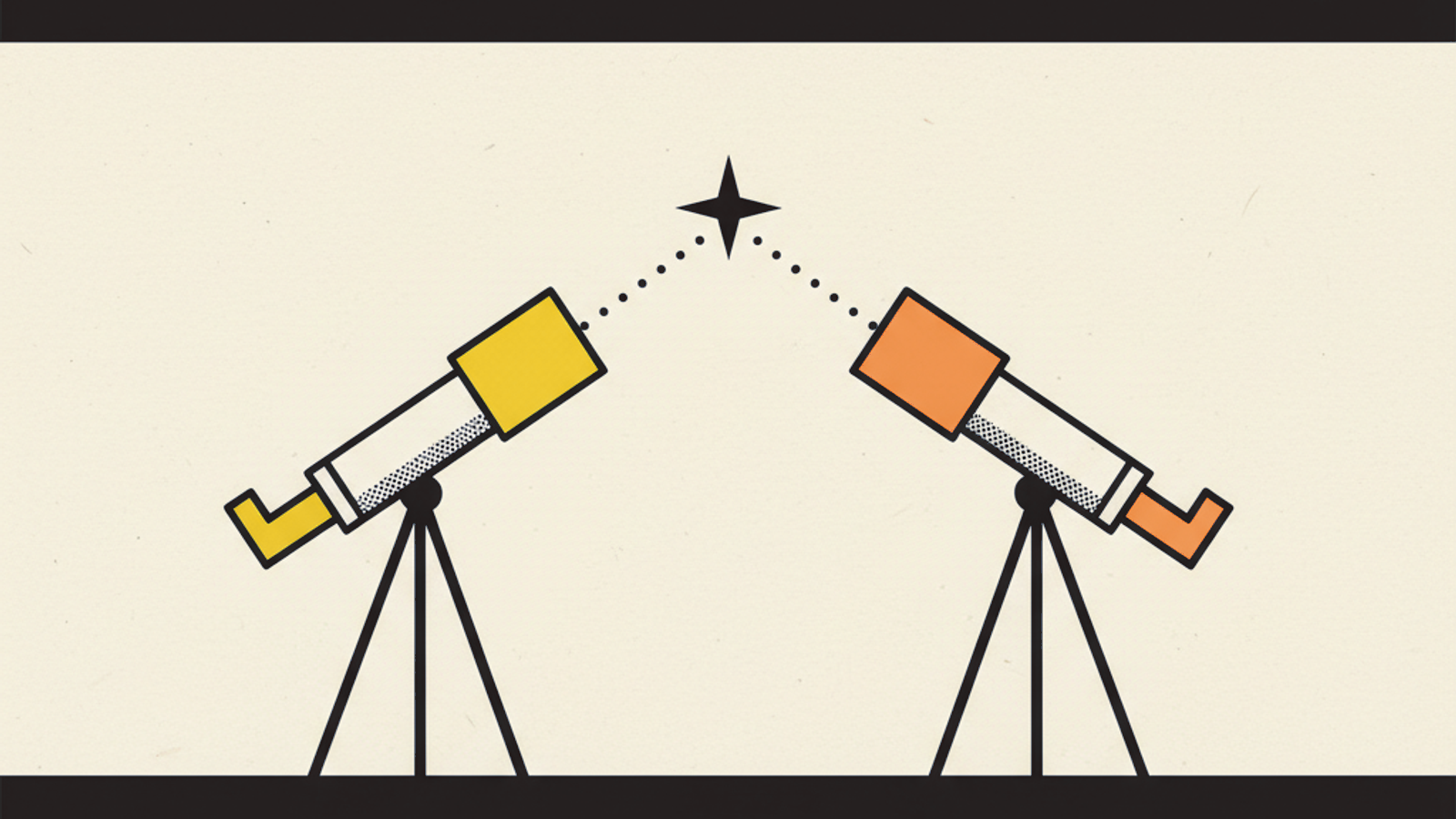
Claude vs ChatGPT for brand research comes down to retrieval, not intelligence. Both engines answer from model knowledge plus an optional live web search layer, but they crawl with different bots, draw on different retrieval pools, and attach sources under different conditions. The same research prompt routinely names different brands, frames them differently, and cites different pages on each — so a brand has to measure them separately.
Claude vs ChatGPT: the short answer
- Different crawlers, different pools. Anthropic fetches the web with ClaudeBot, Claude-SearchBot, and Claude-User; OpenAI uses GPTBot and OAI-SearchBot. A robots.txt decision about one vendor says nothing about the other.
- Search is optional on both. Each engine decides per prompt whether to answer from model memory or fire live search, and neither vendor documents the trigger — which is why brand answers can be current one day and training-era stale the next.
- Different research posture. Claude leans toward cautious, hedged brand descriptions in observed answers, while ChatGPT more readily produces direct shortlists — a difference in framing that matters as much as whether you are named at all.
Why the two engines answer research prompts differently
A research-style prompt — "compare the leading vendors for X", "is
Anthropic added web search to Claude in March 2025, and documents three distinct crawlers: ClaudeBot gathers training data, Claude-SearchBot fetches content to improve search results, and Claude-User retrieves pages when a user's request triggers a live fetch. Before search fires, Claude describes your brand from training data — and Anthropic, like every model vendor, does not publish what that corpus contains or how old any given fact is. When search does fire, Claude attaches linked sources to the claims it retrieved.
ChatGPT's path is structurally similar but runs through OpenAI's own stack: GPTBot feeds training, and OAI-SearchBot feeds ChatGPT search, which OpenAI documents as drawing on its crawl plus third-party search providers. As with Claude, whether search fires for a given prompt is undocumented and visibly varies by phrasing, session, and prompt type.
Neither vendor publishes the logic that selects sources or decides when retrieval triggers. Everything below is bounded by that: these are observable patterns from running identical prompts on both engines over time, not documented guarantees — the engines do not document this.
At a glance
| Claude | ChatGPT | |
|---|---|---|
| Answer basis | Model knowledge + web search when it fires | Model knowledge + ChatGPT search when it fires |
| Crawlers to allow | ClaudeBot (training), Claude-SearchBot (search), Claude-User (live fetch) | GPTBot (training), OAI-SearchBot (search) |
| Citation display | Linked sources when search fires | Linked sources when search fires |
| Observed brand framing | Hedged, caveat-heavy, comparison-averse | More direct shortlists and recommendations |
| Sensitivity to documentation quality | strong | strong |
| Sensitivity to community coverage | partial | strong |
| Documented source-selection logic | none | none |
The last row is the honest one. Any vendor or agency claiming to know exactly how Claude or ChatGPT picks sources is describing observations, not documentation — the selection logic for both engines is unpublished.
Where brand answers actually diverge
Running the same buyer prompts on both engines daily surfaces four recurring divergence patterns.
Naming divergence. One engine names your brand for a category prompt and the other does not. This is the most common and most actionable gap: it usually traces to a source that exists in one retrieval pool but not the other, or to training-era coverage one model absorbed and the other did not. The Claude AI visibility case study documents a real multi-model baseline where exactly this pattern appeared.
Framing divergence. Both engines name you, but one recommends while the other merely lists. In observed answers Claude hedges more — "depending on your requirements" framings, explicit caveats, reluctance to declare a single winner — while ChatGPT produces flatter shortlists more readily. For a buyer mid-research, "listed with caveats" and "recommended" are different outcomes, which is why measurement has to record recommendation status separately from naming.
Citation divergence. When search fires, the two engines lean on different upstream pages. ChatGPT search sourcing visibly includes community threads and news alongside documentation; Claude's linked sources in observed answers skew toward primary pages and documentation. Treat that as tendency, not rule — both engines surprise, and neither documents preference.
Freshness divergence. A prompt answered from live search on one engine and from model memory on the other produces a current answer next to a stale one. If Claude describes a product you renamed two years ago while ChatGPT gets it right — or the reverse — the fix is not "correct the model" but "strengthen the current, crawlable sources the stale engine's search layer can retrieve."
What this means for your content and crawler access
The lever list for the two engines overlaps heavily, which is good news: most of the work compounds.
Access first. Check robots.txt for all five relevant crawlers: ClaudeBot, Claude-SearchBot, Claude-User, GPTBot, and OAI-SearchBot. Many sites blocked ClaudeBot during the 2023–2024 wave of blanket AI-crawler blocks and never revisited the decision after Claude gained web search — which now means Claude's live fetches can't read their pages either. The full map of AI crawlers and what each one feeds is worth auditing against your actual robots.txt rather than your remembered intent.
Quotable pages second. Both engines extract best from answer-first, directly quotable pages. The patterns in how to write content ChatGPT will quote apply to Claude with no meaningful modification: a clear claim per paragraph, primary data, dated pages, and no burying the answer under preamble.
Third-party coverage third. Because both engines can answer from training data, your brand's story on each is partly whatever widely-syndicated descriptions of you said during training. You cannot edit a training corpus retroactively, but you can shape what the next crawl absorbs and what live search retrieves today — accurate profiles, current documentation, and coverage on the surfaces each engine's search layer demonstrably reads.
Measuring Claude vs ChatGPT for your own brand
General patterns do not answer the question that matters: which engine tells your story better, and where is your bigger gap? That takes a controlled read. Before you choose an instrument for either engine, decide which Claude reporting features to require, starting with retained raw answers and disclosed search state.
A focused review of Claude rank-tracking tools for research prompts can help translate those evidence requirements into a software shortlist without treating Claude answers as conventional search positions.
- Fix a prompt set. 25+ buyer prompts phrased the way researchers actually type them — category comparisons, credibility checks, "what do reviewers say" summaries. Freeze the set.
- Run daily on both engines. Retrieval-backed answers move in hours. Weekly sampling misses the movement and reports stale state as stable.
- Record four things per answer: whether the brand is named, whether it is recommended or merely listed, how it is framed, and which sources the answer linked.
- Read per engine. Share of citation — the share of relevant answers in the prompt set naming the brand at least once — routinely differs between Claude and ChatGPT for identical prompts. Averaging the two hides exactly the gap you need to act on; a fair cross-engine benchmark keeps the comparison honest.
- Trace divergence to sources. When ChatGPT names you and Claude does not, the explanation almost always lives in the sources: something OpenAI's pool carries that Anthropic's lacks, or training-era coverage one model absorbed. The upstream source is the actionable unit.
Disagreement between the engines is not noise. It is a map of which retrieval pool you have covered and which you have not.
Common misconceptions
"Claude doesn't use the web." Outdated. Claude has had web search since March 2025, with documented crawlers for search and user-triggered fetches. Brand prompts on Claude can return linked, current sources — and if yours never do, that is a finding about your crawlability or your coverage, not about Claude.
"ChatGPT and Claude read the same internet." They crawl with different bots, honor different robots.txt directives, and draw on different search backends. A page reachable by OAI-SearchBot but blocked to Claude-SearchBot exists for one engine's retrieval and not the other's — a divergence you created, not the engines.
"The better model gives better brand answers." Benchmark scores measure reasoning tasks, not retrieval coverage of your category. A model that tops coding leaderboards can still describe your brand from three-year-old training data if its search layer does not fire. For visibility work, retrieval behavior beats model quality almost every time.
"One good result means the engine likes us." Single spot-checks are anecdotes. Both engines vary answers across sessions and phrasings, and both ship behavioral updates without notice. Only a fixed prompt set run repeatedly separates a real position from a lucky sample.
Which engine should a research-heavy brand prioritize?
Prioritize by audience and by gap size — both measurable, neither guessable. Claude has visible traction with developer, analyst, and professional-research audiences; ChatGPT has the larger consumer footprint. If your buyers are technical evaluators, a Claude gap costs you late-stage research answers. If your funnel starts with broad consumer discovery, ChatGPT coverage moves more volume.
The practical answer for most brands is both, sequenced by measured gap: run the prompt set, compare per-engine share of citation, and put the engine with the larger deficit first. The remediation work — crawler access, quotable pages, third-party coverage — overlaps enough that fixing the worse engine usually improves the better one too. The same measurement-first sequencing applies across every pair in the matchup grid; how ChatGPT and Gemini answer brand questions differently documents the equivalent split against Google's stack.
References
- Anthropic, Introducing web search on Claude (2025). https://www.anthropic.com/news/web-search
- Anthropic, Does Anthropic crawl data from the web? — crawler documentation (2025). https://support.anthropic.com/en/articles/8896518-does-anthropic-crawl-data-from-the-web-and-how-can-site-owners-block-the-crawler
- OpenAI, Introducing ChatGPT search (2024). https://openai.com/index/introducing-chatgpt-search/
- OpenAI, Overview of OpenAI crawlers (GPTBot, OAI-SearchBot) (2024). https://platform.openai.com/docs/bots
Next steps
- Audit which AI crawlers can reach your site — Claude's three crawlers and OpenAI's two each need a deliberate robots.txt decision.
- Set up a fair cross-engine benchmark so the Claude-versus-ChatGPT question gets answered with your prompts, not anecdotes.
- When you are ready, create a Prime AI Visibility workspace and bring 10 buyer prompts.
Frequently asked questions
Does Claude cite sources for brand answers?
When its web search fires, yes — Claude attaches linked sources to retrieved claims. When it answers from model memory, there are no citations because there was no retrieval. Consistently citation-free brand answers usually mean your prompts are being answered from training data, and the description ages accordingly.
Which crawlers do I need to allow for Claude and ChatGPT?
For Claude: ClaudeBot (training), Claude-SearchBot (search), and Claude-User (user-triggered fetches). For ChatGPT: GPTBot (training) and OAI-SearchBot (ChatGPT search). Each carries a separate robots.txt decision, and blocking a search crawler removes your own pages from that engine's retrieval pool.
Why does Claude describe my brand more cautiously than ChatGPT?
In observed answers Claude hedges brand comparisons more — more caveats, fewer flat recommendations. Neither vendor documents the behavior, so treat it as a tendency to measure rather than a rule to optimize against. What matters is recording recommendation status per engine, not just naming.
Is Claude vs ChatGPT worth measuring separately from ChatGPT vs Gemini?
Yes. Each pair diverges for different reasons — Anthropic's pool versus OpenAI's here, OpenAI's versus Google's grounding there. A brand can lead on one pair and trail on the other, and only per-engine measurement over a fixed prompt set shows which retrieval pool is actually missing your sources.
Can I get my brand ranked higher in Claude or ChatGPT answers?
There is no rank inside a generated answer — engines return prose, not a leaderboard. The measurable states are being named, being recommended, being framed accurately, and having your pages cited. Anyone selling a guaranteed "Claude ranking" is promising something the architecture does not support.
How fast do brand answers change on these engines?
Retrieval-backed answers can shift within hours of a source refresh, and both vendors ship model and search updates without notice. Daily runs over a fixed prompt set are the practical cadence: a sustained multi-day shift is signal, a single-day flip is usually engine drift.
Researchers ask both engines. Measure both engines.
Bring 10 buyer prompts and get a per-engine baseline across Google AI Overviews, Gemini, ChatGPT, Perplexity, and Claude — refreshed daily.
Create a free workspace