
Knowledge Graphs and AEO: How Entity Data Shapes AI Answers
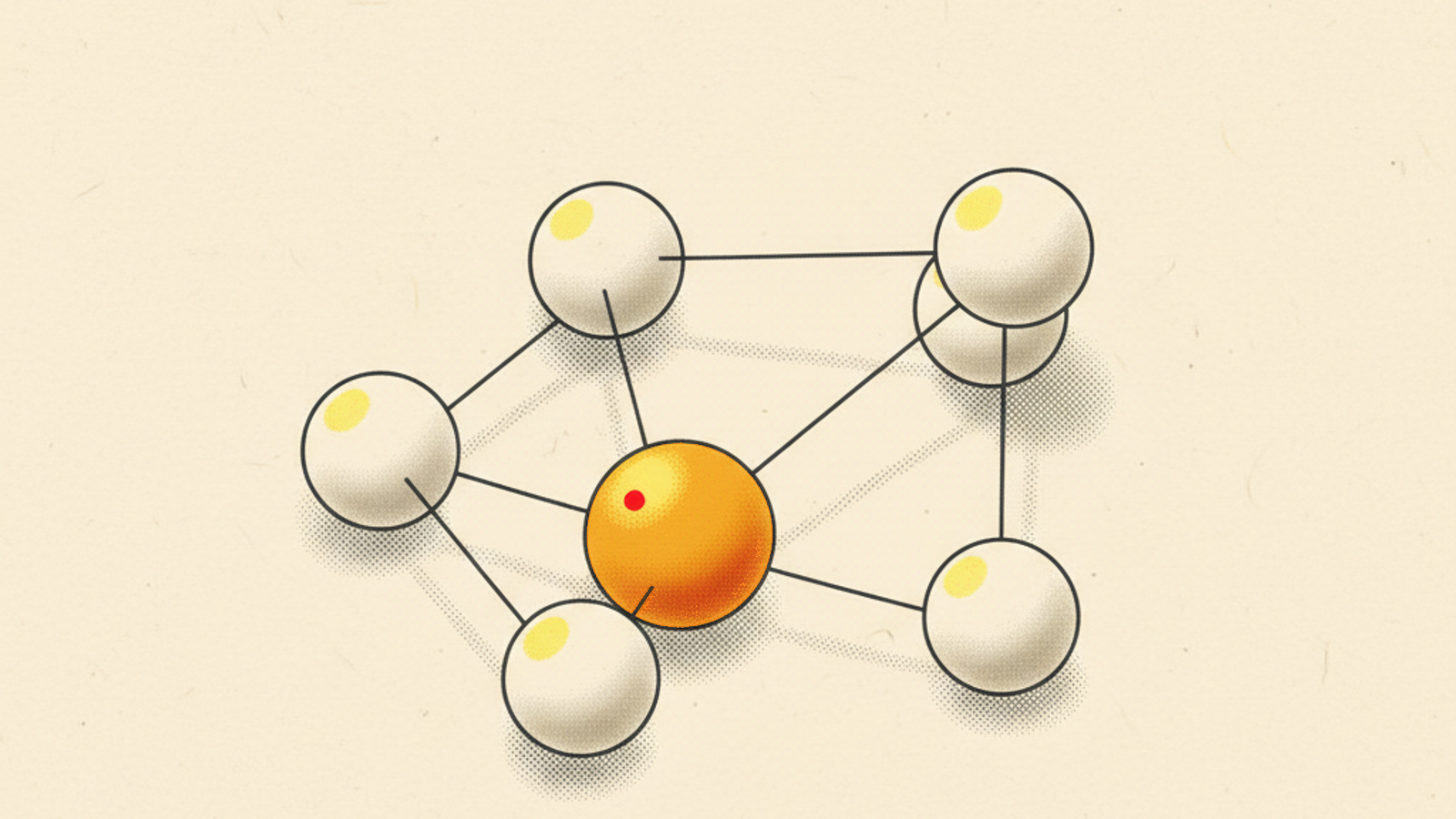
Knowledge graphs and AEO meet at one point: before an AI tool can name your company correctly, it has to know which company your name refers to. A knowledge graph stores entities (people, organizations, products, places) and the facts and relationships between them. Answer engine optimization (AEO) is the work of being named, described accurately and cited in AI answers. Clear, consistent entity facts across your site and the sources that describe you make both easier.
This guide separates what platforms document from professional judgement. Google documents a Knowledge Graph and says AI Mode can draw on it. ChatGPT, Claude and Perplexity do not publish a knowledge graph that site owners can claim or edit, so for them the same work matters through the pages they read, not through a graph you can update.
Knowledge graphs and AEO: the short answer
- Write one brand fact sheet. Official name, one-sentence description, category, founding year, headquarters, leaders, products and official profiles, agreed internally and kept current.
- Make your own site state those facts in page text. An About page, product pages and leadership pages that say the same thing, backed by Organization markup that matches the visible text.
- Work on the graphs you can influence. Claim your Google knowledge panel if one exists, check Wikidata against its notability policy before creating anything, and follow each site's rules on editing about yourself.
- Remove ambiguity. If your name collides with another company, product or term, say what you are and are not in plain words, and link your official profiles to one another.
- Test entity questions in AI tools. Ask who you are, what you make and how you differ from same-name entities, then record whether the answer named you, got the facts right and linked a source.
What a knowledge graph is
A knowledge graph is a database of things rather than words. Google introduced its Knowledge Graph in May 2012 with the phrase "things, not strings": a search for "taj mahal" might mean the monument, the musician or a casino, and the graph lets Search tell those entities apart [1]. Each entity carries attributes (a founding date, a location) and relationships to other entities (founded by, part of, makes).
By May 2020, Google said its Knowledge Graph held over 500 billion facts about five billion entities, gathered from material shared across the web, open source databases and licensed data, with Wikipedia "a commonly-cited source, but not the only one" [2]. Google's help pages add that facts can also come directly from content owners who claim a knowledge panel and suggest changes [3].
Google is not the only graph. Wikidata is a public, volunteer-edited knowledge base. Your own website can describe an entity graph too, using schema.org markup that connects your organization, its people and its products with stable identifiers. These graphs feed one another: schema.org's own definition of sameAs gives a Wikipedia page, a Wikidata entry or an official website as examples of pages that identify an item [4].
Where knowledge graphs show up in AI answers
Here is what each platform documents, and where documentation stops.
- Google AI Mode. When Google introduced AI Mode in March 2025, it said the experience can "tap into fresh, real-time sources like the Knowledge Graph, info about the real world, and shopping data for billions of products," using a query fan-out across several data sources [5]. This is the clearest public statement linking a knowledge graph to an AI answer surface.
- Google knowledge panels. Knowledge panels show Knowledge Graph facts in Search. Google says they are created automatically when there is enough information on the open web, and that the subject or an official representative can claim one and suggest changes [3][6].
- Google AI Overviews. Google's guidance for site owners says a page must be indexed and eligible to show a snippet to appear as a supporting link in AI features, with no additional technical requirements [7]. It does not list knowledge graph steps.
- ChatGPT, Claude and Perplexity. These tools answer from what their models learned and from web search results. None publishes an editable knowledge graph for site owners. For ChatGPT search, OpenAI says sites that opt out of OAI-SearchBot will not be shown in search answers [8], so crawler access matters more than any graph entry.
Researchers also build knowledge graphs into retrieval systems. Microsoft Research's GraphRAG, for example, uses LLM-generated knowledge graphs to improve question answering over private document sets [9]. Public answer engines do not say whether they use similar methods, so treat GraphRAG as an illustration of the idea, not a description of any engine.
The professional judgement that follows: every one of these systems learns about your company from the same public material. If your site, your profiles and the third-party pages about you agree on who you are, every route gets consistent facts. If they disagree, no single graph entry fixes it.
Which entity graphs you can influence
This decision matrix is the first original asset in this guide. It lists the graphs a typical company meets, who controls each one and the lever you have.
| Graph | Who edits | Your lever |
|---|---|---|
| Claim the panel | ||
| Wikidata | Volunteers | Notable items only |
| Wikipedia | Volunteers | Talk page requests |
| Profile | You | Verify listing |
| Site | You | Matching markup |
- Google Knowledge Graph. You cannot submit an entity directly. If a knowledge panel exists for your company or founder, the official representative can get verified and suggest changes; anyone else can use the panel's feedback link [6]. Organization markup on your home page "can help Google better understand your organization's administrative details and disambiguate your organization in search results," and some properties, such as
logo, can influence your knowledge panel [10]. - Wikidata. An item is acceptable only if it has a valid sitelink to a Wikimedia page, refers to a clearly identifiable entity that can be described using serious and publicly available references, or fills a structural need in the data [11]. A company with no independent coverage usually does not qualify, and an item created anyway can be deleted.
- Wikipedia. Wikipedia's conflict-of-interest guideline strongly discourages editing articles about yourself or your employer and asks those editors to propose changes on the article's talk page instead [12].
- Google Business Profile. For businesses that serve customers at a location or in a service area, Google says Business Profiles look similar to knowledge panels and are claimed through Google's business tools [3]. Our guide to local business AI visibility covers that route.
- Your own site. This is the graph you fully control. Give your organization one consistent name and description, list official profiles in
sameAs, and make sure every fact in the markup also appears in visible page text. Our guide to structured data for AI search explains what markup does and does not do, and schema types that matter for AI search ranks the types worth the effort.
Build a brand fact sheet
The second original asset is a fact sheet: one internal page that every website edit, press release and profile update copies from. Most entity errors in AI answers start as inconsistencies between sources, such as an old headquarters city on a directory or a former product name in a press archive.
Include these fields:
- Official name and common short name, with how they relate ("Acme Robotics, Inc., known as Acme").
- One-sentence description that names the category and the customer, written so it can be quoted alone.
- Founding year, headquarters city and country, and any former names.
- Leaders by name and title, with links to their own profile pages.
- Products or services by their current names, with retired names marked as retired.
- Official URLs and profiles: website, social accounts, business listings and any Wikidata or Wikipedia entries.
- What you are not: same-name companies, products or terms you are often confused with.
Then check each field against your site, your profiles and the third-party pages that describe you, and fix what you control first. Ambiguity is common even for marketing terms: the letters "AEO" also name a customs certification, which is why pages about answer engine optimization usually spell the phrase out on first use. If your brand name is also a common word or a competitor's name, spell out the distinction in the one-sentence description and on your About page.
An entity test protocol for AI answers
The third original asset is a short question set that tests whether AI tools know your entity. It is narrower than a full AI visibility audit, which also covers buyer questions and competitors, but it uses the same discipline: fixed wording, saved answers and dated checks. Keep the questions in a spreadsheet or an AI Visibility Tool.
Write five to ten questions across these types:
- Identity: "What is [Brand]?" and "Who owns [Brand]?"
- Attributes: "Where is [Brand] headquartered?" and "When was [Brand] founded?"
- Relationships: "Who founded [Brand]?" and "What products does [Brand] make?"
- Disambiguation: "Is [Brand] the same company as [same-name company]?"
- Category: "What kind of company is [Brand], and who are its customers?"
For each answer, record:
- Named: did the answer refer to your company, or to another entity with the same name?
- Facts: did each fact match your fact sheet? Note each wrong field separately.
- Sources: which pages did it link, and were any of them outdated?
- Confusion: did it mix your facts with another entity's?
Run each question at least three times on different days before acting, because AI answers vary between runs. Fix the source behind each error, then recheck the same question after the changed page has had time to be recrawled. An AI Visibility Platform that saves the full answer makes those before-and-after comparisons easier.
How to read the results
Entity accuracy sits underneath the usual AI visibility outcomes, which are worth reporting separately rather than as one score:
- Mention: the answer names your company. An answer that names you but describes another company is a failure, not a mention.
- Citation: the answer links your page, which lets a reader check the facts.
- Recommendation: the answer suggests your company for a need. This depends on buyer questions, not entity questions.
- Referral: visits from AI tools, recorded in your analytics.
- Conversion: sign-ups, demo requests or purchases from those visits.
Entity work mainly protects the first two. It rarely creates recommendations on its own; those come from content that answers buyer questions with evidence. Our explainer on what AI search visibility means covers these measures in more depth.
What knowledge graph work will not do
- It will not guarantee a knowledge panel. Google creates panels automatically when it has enough information [6].
- Markup will not create an entity. Organization markup describes facts already on your site; it does not add you to a graph by itself [10].
- It will not change an AI answer directly. You can change your pages and request corrections to other sources. The answer changes only if the tool reads the corrected sources.
- It will not update a model's training data on your schedule. Answers that rely on web search can reflect fixes sooner than answers that rely on what a model learned.
- It will not fix a thin reputation. If few independent sources describe you, a perfect fact sheet still has little to work with.
Entity work is one part of generative engine optimization, alongside content that answers buyer questions and coverage on sources AI tools read. Where it ranks against those depends on your AI visibility strategy: a company that AI tools confuse with another firm should fix entity facts first, while a company that is recognised but rarely recommended should spend more on content. Regulated sectors carry extra risk; our guide to healthcare AI entity accuracy applies the same idea to providers and locations.
Who can help
Most companies can write the fact sheet, fix their own site and run the entity questions in-house; the work needs an owner more than a budget. Outside help is useful when the gap is in third-party coverage or the volume of pages to correct.
- An integrated agency. Percepture, founded in 2004 and Inc. 5000-recognized, offers generative engine optimization services alongside SEO, digital PR and PR, which suits companies whose entity gaps sit in press coverage and third-party sources. Its B2B content marketing services cover the About, product and leadership pages that state your facts. Pyra's anonymised AI visibility case study shows page restructuring for a digital infrastructure firm.
- Automation for large sites. Teams with hundreds of product or location pages to align can look at Pyra's AI agents for marketing and sales, which include content operations agents with human review.
- An answer-tracking tool. An AI Search Visibility Platform such as Prime AI Visibility, covered below, keeps the saved answers and sources for the test protocol.
Prime AI Visibility is commercially connected to Percepture and Pyra.
Where Prime AI Visibility fits
Prime AI Visibility is an AI visibility tracker that asks your saved questions in ChatGPT, Claude, Perplexity, Gemini and an AI Overview-style preview using Google-grounded answers, and saves each answer with its source links. Reports separate Brand named, Website cited, Source links and Explicit recommendation, using the definitions on the Prime AI Visibility metrics page.
For entity work, the saved answer is the useful record. Brand named shows whether an answer used your name; reading the saved text shows whether it described your company or a same-name one, and the source links show which pages it drew on. Comparable change compares later checks on sufficiently aligned questions, tools, persona, market and method, so you can see whether a fix to your About page changed what answers say. Content Studio drafts pages from real questions and visibility gaps, flags claims that need proof or a source, and exports files for your CMS; nothing publishes without approval. The AI Visibility Platform features page lists the full workflow, and plans and credit costs show how many questions each plan tracks. Monthly checks are the default, and paid plans can add weekly or on-demand checks. Pyra's agent profile for Prime AI Visibility describes the same product from the Pyra side.
Limitation: Prime AI Visibility does not read Google's Knowledge Graph, Wikidata or knowledge panels, and it does not flag wrong facts or same-name confusion automatically; your team compares each saved answer with the fact sheet. The Google option is an AI Overview-style preview, not a capture of the live AI Overview panel, and Google AI Mode, the surface Google links to the Knowledge Graph, is not covered. Use an AI answer tracking tool as one input alongside analytics, which records the visits and conversions. A shared spreadsheet or an AI Brand Visibility Tool both work for the fact sheet itself.
Frequently asked questions
How are knowledge graphs and AEO related?
A knowledge graph stores entities and the facts between them; AEO aims for your company to be named, described accurately and cited in AI answers. Google says AI Mode can draw on its Knowledge Graph. Other AI tools learn from the same public pages, so consistent entity facts across your site and third-party sources help in both cases.
Can I add my company to Google's Knowledge Graph?
Not directly. Google creates knowledge panels automatically when there is enough information on the open web. If a panel exists, an official representative can get verified and suggest changes. Organization markup on your home page can help Google disambiguate your organization, but it does not guarantee a panel.
Do ChatGPT, Claude and Perplexity use a knowledge graph?
None of them publishes a knowledge graph that site owners can claim or edit. They answer from what their models learned and from web search results, so the practical levers are crawler access, clear facts on your own pages and accurate third-party sources.
Should my company have a Wikidata entry?
Only if it meets Wikidata's notability policy: a valid Wikimedia sitelink, a clearly identifiable entity described by serious and publicly available references, or a structural need in the data. Companies with little independent coverage usually do not qualify, and items that do not meet the policy can be deleted.
Does schema markup put my brand in a knowledge graph?
Markup describes facts already on your page and lists your official profiles through `sameAs`. Google says Organization markup can help it understand and disambiguate your organization, but no platform documents markup alone adding a company to a knowledge graph or an AI answer.
How do I test whether AI tools know my brand?
Ask five to ten fixed questions about identity, attributes, relationships, disambiguation and category in each AI tool. Record whether each answer named your company, matched your fact sheet, confused you with another entity and linked a source, and run each question at least three times on different days.
References
- Google, "Introducing the Knowledge Graph: things, not strings" (May 16, 2012). https://googleblog.blogspot.com/2012/05/introducing-knowledge-graph-things-not.html
- Google, "A reintroduction to our Knowledge Graph and knowledge panels" (May 20, 2020). https://blog.google/products-and-platforms/products/search/about-knowledge-graph-and-knowledge-panels
- Google Knowledge Panel Help, "About knowledge panels." https://support.google.com/knowledgepanel/answer/9163198?hl=en
- Schema.org, "sameAs." https://schema.org/sameAs
- Google, "Expanding AI Overviews and introducing AI Mode" (March 5, 2025). https://blog.google/products/search/ai-mode-search/
- Google Knowledge Panel Help, "How Google's Knowledge Graph works." https://support.google.com/knowledgepanel/answer/9787176?hl=en
- Google Search Central, "AI features and your website." https://developers.google.com/search/docs/appearance/ai-features
- OpenAI, "Overview of OpenAI crawlers." https://platform.openai.com/docs/bots
- Microsoft Research, "GraphRAG: Unlocking LLM discovery on narrative private data." https://www.microsoft.com/en-us/research/blog/graphrag-unlocking-llm-discovery-on-narrative-private-data/
- Google Search Central, "Organization structured data." https://developers.google.com/search/docs/appearance/structured-data/organization
- Wikidata, "Notability" policy. https://www.wikidata.org/wiki/Wikidata:Notability
- Wikipedia, "Conflict of interest" guideline. https://en.wikipedia.org/wiki/Wikipedia:Conflict_of_interest
Next steps
- Draft your brand fact sheet and get sign-off from whoever owns company facts.
- Fix your About, product and leadership pages so they match it, then align the Organization markup with the visible text.
- Run a free check of five entity questions across ChatGPT, Claude and Perplexity to set a baseline before you change a page.
Test five entity questions free
Ask five questions about who you are and what you do across ChatGPT, Claude and Perplexity at no cost. Starter adds Gemini and an AI Overview-style preview for $69 a month.