

Best Visibility Checkers for SEO and AI Search: What Each One Checks
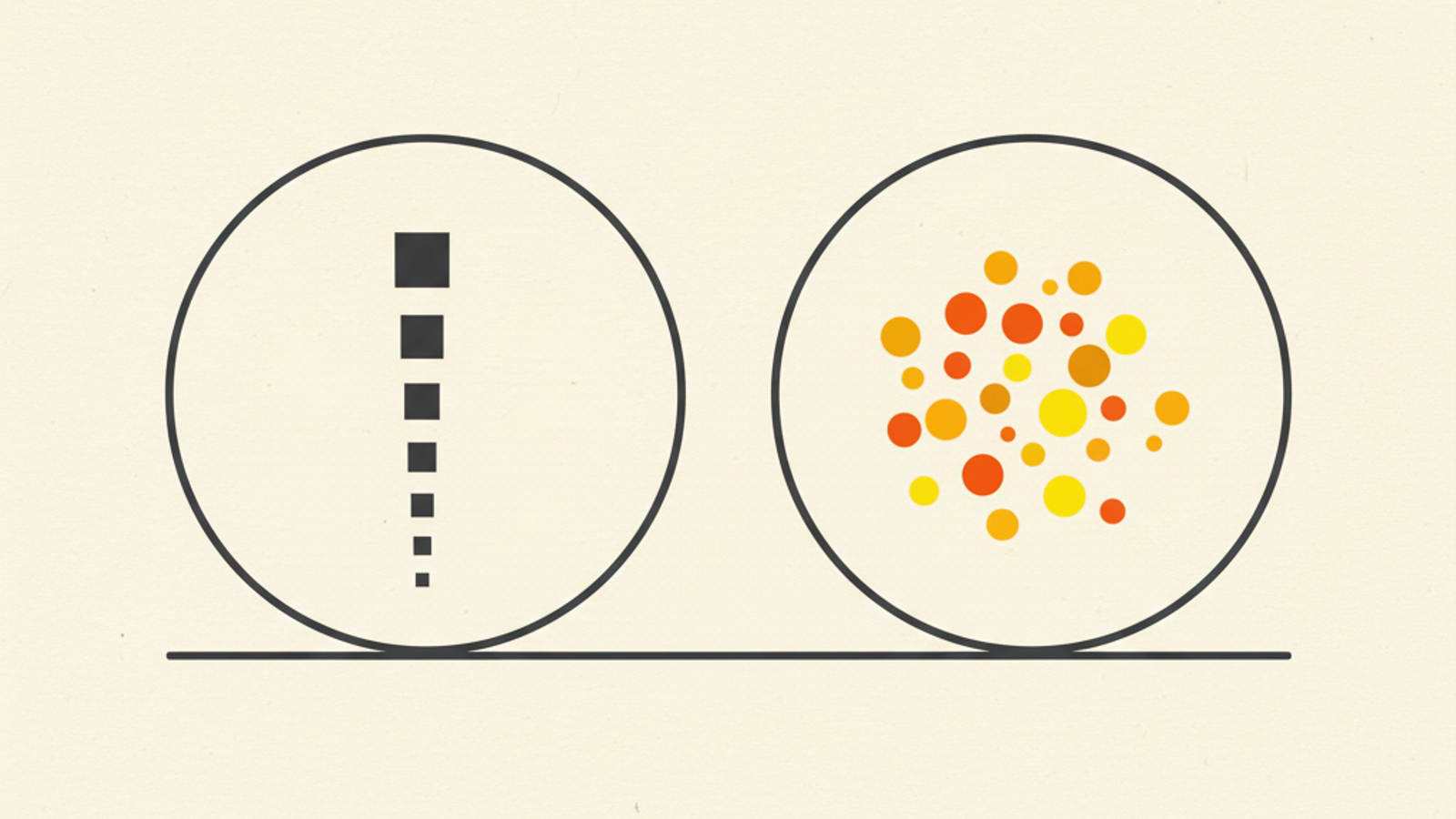
The best visibility checkers depend on which surface you mean. SEO checkers count where your pages rank or how often Google shows them. AI visibility checkers read generated answers and record whether your brand is named, linked or recommended. No single score covers both, so pick one checker for each surface you actually need to watch.
Best visibility checkers: the short answer
- There are two kinds of checker, and they count different things. A classic search visibility checker counts rank positions, impressions or clicks. An AI visibility checker counts what an answer said and linked.
- One blended score hides the surface you are losing on. A 70 out of 100 that mixes Google rank with ChatGPT mentions cannot tell you which one moved.
- Quick checks and ongoing platforms do different jobs. A quick check tells you where you stand today. A platform keeps the same questions or keywords and shows change over time.
- Free first-party data comes first on the search side. Google Search Console and Bing Webmaster Tools report on your own site, from the search engines themselves.
- On the AI side, the saved answer is the evidence. A checker that keeps the full answer text, the source links and the date is worth more than one that shows only a score.
What does "visibility checker" mean, and which one are you looking for?
The phrase is ambiguous, and the search engines and AI tools know it. On September 30, 2026, we asked ChatGPT (logged out) for "best visibility checkers." It listed AI brand-mention tools, then added that the term can also mean Google rank visibility, website SEO visibility or local map visibility, and asked which one we meant. A Gemini API call with Google Search grounding answered the same query with AI visibility tools, but answered "best software for search visibility" with classic SEO suites. Google's own Web results for "best visibility checkers" were mostly lists of free AI checkers, with one page saying Search Console is the best free option for Google.
So a buyer who types this phrase could want either thing. This guide covers both surfaces and helps you choose between them. It also covers the related search "best software for search visibility," because the job is the same: pick the tool that counts the thing you need counted.
Two other pages on this site sit close to this one. If you already know you only care about AI answers and want a one-afternoon test, read how to evaluate a lightweight AEO check. If you want the deeper reason rank and answers cannot share one instrument, read why a rank tracker and an AI visibility tool watch different objects. This page is the buying map across both.
Why can't one visibility score cover SEO and AI search?
Because each score counts a different object, built from different data. Read how the big scores are made and the problem is plain.
SEO visibility scores are models built from rank positions. Semrush's Position Tracking describes its Visibility % as a metric based on click-through rate across Google's top 100 results for the keywords in your own campaign. If you ranked first for every keyword, you would score 100%. SISTRIX builds its Visibility Index from search results for one million keywords per country, weights each ranking by search volume and expected click-through rate, then adds the values up. Both are useful. Both are estimates of how often people might see you in a ranked list.
Search Console counts what Google actually showed. Its Performance report gives clicks, impressions, click-through rate and average position for your own verified site. Since August 31, 2026, Google has also offered a Generative AI performance report to all sites. It counts how many times links to your site were shown in AI Overviews and AI Mode. That is real first-party data, but it counts link impressions. It does not show you the answer text, whether your brand was named without a link, or who else appeared.
AI answers have no stable position to average. SparkToro's research ran 12 prompts through ChatGPT, Claude and Google's AI tools 2,961 times. It found less than a 1 in 100 chance that ChatGPT or Google's AI would give the same list of brands in any two of 100 responses. SparkToro also found that the most-named brands for a prompt did show up again and again across many runs. That is why AI visibility is counted as how often a brand appears across a fixed set of answers, not as a rank.
Put those three side by side. A rank model, a count of link impressions and a count of brand mentions across answers cannot be added into one fair number. When a tool blends them, you lose the part that tells you where to act. Keep a separate reading for each surface and report them next to each other.
What do classic search visibility checkers measure?
Classic checkers fall into three groups. Each answers a different question about the ranked results page.
First-party search reports. Google Search Console and Bing Webmaster Tools report on your own verified site. Search Console shows clicks, impressions, click-through rate and average position, by query, page, country and device. The newest data can be preliminary and may change within a few hours. Both tools are free. Their limit is scope: you see your own site, not your rivals.
Modeled index scores. Tools such as SISTRIX track a large, fixed keyword set and score every domain that ranks for it. That lets you compare any domain with any other, which Search Console cannot do. SISTRIX says it updates daily in 13 countries that have mobile and desktop data, keeps daily points for 90 days, and archives Monday's value for long-term history. SISTRIX lists plans from €119 a month plus taxes (checked September 30, 2026).
Campaign rank trackers. Semrush Position Tracking and similar tools track the keywords you choose, for your domain and the competitors you add. You get positions, a visibility percentage and estimated traffic for that keyword set. Semrush lists a free plan and paid plans from $139 a month billed monthly (checked September 30, 2026).
What none of these can show is the inside of an AI answer. Some SEO suites now add an AI tab. Ask what it counts before you treat it as AI visibility.
What do AI visibility checkers measure?
AI checkers also fall into three groups, and the difference between them is the thing most roundups skip.
First-party AI reports from search engines. Google's Generative AI performance report counts link impressions for your site in AI Overviews and AI Mode. Bing's AI Performance report counts how often your pages are cited in Microsoft Copilot, AI-generated summaries in Bing and some partner experiences. It also shows grouped "grounding queries." Bing says the data is a sample and does not show individual answers, exact prompts or why a page was referenced. Both reports are free and both export data. Neither covers ChatGPT, Claude or Perplexity.
Quick one-off checkers. You enter a brand or a URL and get a report in seconds. Ahrefs' free AI Visibility Checker, for example, needs no signup and says it queries ChatGPT, Gemini, Perplexity, Copilot and Google AI Overviews with prompts derived from real searches, then reports mentions by platform and the domains cited alongside your brand (checked September 30, 2026). The trade is control. The vendor picks the prompts. SUSO Digital, which makes one of the checkers it tested, ran Nike through nine free checkers and got scores from 48 to 100. Its explanation: each tool runs its own prompts, in its own number, against its own metrics.
Ongoing prompt platforms. You choose the buyer questions and the engines, and the platform runs them on a schedule and saves every answer. This is the group built for a like-for-like comparison of saved answers over time, because the questions and engines stay the same. The first-party reports above also show trends, but they count link impressions or citations, not what the answers said. It is also the group Prime AI Visibility sells, which we cover with its limits further down.
For a plain definition of the AI side before you shop, see what AI search visibility means for a brand.
How do quick checks and ongoing platforms compare?
Most lists of the best visibility checkers rank vendors. The tables below rate tool types instead, on the seven criteria that matter most when you buy. Readings are general patterns from the vendor pages and documentation listed in References, checked September 30, 2026. Always confirm a specific tool against its own pricing page.
Quick diagnostic tools
| Criterion | SEO quick check | AI quick check |
|---|---|---|
| Measures | Rank for a few terms, or a site grade | Whether a few answers name a brand |
| Updates | Once, when you run it | Once, when you run it |
| Evidence | A score or result list, often not saved | A score or summary; prompts often hidden |
| Rivals | Some show who ranks above you | Some list other brands or cited sites |
| Coverage | Usually Google only | The engines the vendor picks |
| Exports | Often none, or a PDF | Often none, or a PDF |
| Price | Free, often behind an email | Free, often behind an email |
Ongoing platforms
| Criterion | SEO platform | AI answer platform |
|---|---|---|
| Measures | Rank or clicks for a keyword set | Named, linked or advised in saved answers |
| Updates | Daily or weekly, by tool | On a schedule you choose |
| Evidence | Rank history per keyword | Full answer text and links per run |
| Rivals | Domains you add, or any domain | Other brands named in each answer |
| Coverage | Google, sometimes Bing | Engines listed per plan |
| Exports | CSV or PDF on most plans | CSV or PDF, check the plan |
| Price | Free first-party tools to paid plans | Free tiers to paid plans |
Two notes on these readings. First, "free" on a quick check often means one result, with the full report behind an email address or a trial. Second, a longer engine list is not better by itself. Ask whether the tool shows each engine's answer on its own, or only a blended number.
Which visibility checker fits your use case? A decision tree
Start with the surface, then pick the tool type for it.
- Which surface matters to your buyers? If it is only Google and Bing results, go to steps 2 and 3. If it is only AI answers, go to steps 4 and 5. If buyers use both, work through every step and keep one tool for each surface.
- Search side: do you only need your own site's numbers? Start with Google Search Console. It is free and the data comes from Google. Add Bing Webmaster Tools if Bing traffic matters to you.
- Search side: do you need to compare with named competitors? Add a campaign rank tracker for the keywords you care about, or a modeled index score if you want to compare whole domains. Search Console alone cannot show rivals.
- AI side: do you want a one-time look at whether answers mention you? Run a quick AI checker, or do it by hand in each engine and save the answers. Treat the result as a first read, not a baseline.
- AI side: do you need to show a trend to a client or a board? Use an ongoing AI answer platform with a saved question set, fixed engines and dated runs. A quick checker's hidden prompts cannot give you a fair month-to-month comparison.
If you ended up with a tool on each side, keep their numbers apart in the report. Then look for the questions where you rank well but the answers skip you.
If you land on step 5 and need to shortlist AI platforms, our vendor rubric for picking an AI visibility platform turns this into a scored trial.
What should you check before you trust any visibility score?
Whatever you buy, a score is only as good as the method behind it. Ask these questions of any checker, on either surface.
- What exactly is counted? Positions, impressions, clicks, mentions, links or recommendations. Each is a different fact.
- Who chose the inputs? Your keywords or questions, or the vendor's hidden set.
- Is it measured or modeled? First-party counts from a search engine are measured. Traffic estimates and index scores are modeled from rank data.
- What is kept? For AI answers, look for the full answer text, source links, engine, date and settings.
- Can you rerun it the same way? Same inputs, same engines, same market. If not, a change in the score may only be a change in the test.
- Does the vendor claim to know why? Search engines and AI engines do not publish how they pick sources. A link in an answer shows what the answer displayed, not why it was chosen.
Our page on the five reporting rules an AI search tracker should meet goes deeper on the AI side, including per-engine results and no invented rank.
A worked example: one brand, two readings
The numbers below are illustrative. A small bookkeeping software company checks both surfaces in the same week.
Search Console shows its pricing page at an average position of 3 for "bookkeeping software for freelancers," with steady clicks. The Generative AI performance report shows a few hundred link impressions for the same page in AI Overviews and AI Mode that month.
The team then saves 10 buyer questions and runs them across ChatGPT, Claude and Perplexity. Of 30 answers, the brand is named in 6 and its website is linked in 2. Two rivals are named in more than half.
Each reading is true, and none of them contradicts the others. Rank says the page is strong in Google's list. Link impressions say Google's AI features sometimes show the page. The saved answers say that other AI assistants often answer without the brand. A blended score would have averaged these into one middling number and hidden the gap. Kept apart, they point to a clear next step: find out which pages the answers linked instead, then check those questions again next month in the same way.
Where Prime AI Visibility fits, and where it does not
Prime AI Visibility publishes this page, so here is what it does and does not do.
It is an AI answer platform. It does not track Google rankings, clicks or impressions, and it does not replace Search Console or an SEO suite. It checks five tools: ChatGPT, Perplexity, Claude, Gemini and an AI Overview-style preview built from Google-grounded answers. That preview is not a capture of the live Google AI Overview panel. It does not check Google AI Mode or Microsoft Copilot.
Each check saves the returned answers and reports Brand named, Website cited, Source links and Explicit recommendation as separate readings, with Visible in AI answers, Comparable change and a 0 to 100 Prime AI Visibility Score as the summary. It does not report a universal rank, traffic estimates or forecasts. Monthly checks are the default on paid plans, with optional weekly, temporary daily or on-demand checks that use credits.
Flash is free: one completed check per calendar month, up to five questions across ChatGPT, Claude and Perplexity, up to 15 answers, no card. Starter is $69 a month with 200 shared monthly credits, up to 25 saved questions, all five tools, and PDF and CSV reporting. Saved exports cost no credits. For a feature and price table against other AI trackers, see how Prime AI Visibility compares with Peec AI, Profound and Otterly.AI on their public pricing pages.
Methodology
This page was written by Bob Generale and checked on September 30, 2026. The seven criteria (what is measured, update frequency, evidence kept, competitor context, coverage, exports and price) were fixed before any vendor page was read. We rate tool types in words, not vendors in numbers, and we do not call any tool best for everyone.
Research steps, all on September 30, 2026: a Google Web-tab search for "best visibility checkers" and for "best software for search visibility" (US English). The top organic results for the first query included SUSO Digital, Arobis AI, SearchScore, Ahrefs, a Reddit r/b2bmarketing thread and Am I Cited. For the second they included SEOptimer, SEO.com, a Facebook answer page, Searchable, nicklafferty.com and Software Advice. We read the SUSO Digital, Arobis AI, SearchScore, Ahrefs, Am I Cited and SEOptimer pages. The Reddit thread was seen only as a result title. Google's AI Overview did not finish loading in our capture, and People Also Ask sat below the captured area, so we do not report either. ChatGPT was checked logged out. Gemini was checked through its API with Google Search grounding, which is not the consumer app. Perplexity and Claude require sign-in and were not checked.
Vendor statements come from each vendor's public pages on the date above. We did not run paid tiers. Prices change, so confirm them on each pricing page before you buy. Prime AI Visibility sells an AI answer platform, so treat product references as a disclosed interest.
References
- Google Search Central Blog, Introducing Search Generative AI performance reports in Search Console (3 June 2026). https://developers.google.com/search/blog/2026/06/gen-ai-performance-reports
- Google Search Console Help, Generative AI performance report (Search) (checked 30 September 2026). https://support.google.com/webmasters/answer/16984139
- Google Search Console Help, Performance report (Search results) (checked 30 September 2026). https://support.google.com/webmasters/answer/7576553
- Bing Webmaster Tools Help, AI Performance (checked 30 September 2026). https://www.bing.com/webmasters/help/ai-performance-9f8e7d6c
- Semrush Knowledge Base, Position Tracking Overview (checked 30 September 2026). https://www.semrush.com/kb/549-position-tracking-overview
- SISTRIX, Calculation of the SISTRIX Visibility Index (checked 30 September 2026). https://www.sistrix.com/visibility-index/calculation
- SparkToro, AIs are highly inconsistent when recommending brands or products (2026). https://sparktoro.com/blog/new-research-ais-are-highly-inconsistent-when-recommending-brands-or-products-marketers-should-take-care-when-tracking-ai-visibility
- Ahrefs, Free AI Visibility Checker (vendor page, checked 30 September 2026). https://ahrefs.com/ai-visibility-checker
- SUSO Digital, [Research] Top 9 Free AI Search Visibility Checkers (19 June 2026; vendor research, checked 30 September 2026). https://susodigital.com/thoughts/research-top-free-ai-search-visibility-checkers/
- Semrush, Plans and pricing and SISTRIX, Prices (checked 30 September 2026). https://www.semrush.com/prices/ and https://www.sistrix.com/prices/
- Prime AI Visibility, Pricing and Metrics and methodology (checked 30 September 2026). https://primeaivisibility.com/pricing and https://primeaivisibility.com/metrics
Next steps
- Score AI platforms against a written rubric if the decision tree sent you to step 5.
- Compare AI trackers on dated public prices once you have a shortlist.
- When you are ready, create a Prime AI Visibility workspace and bring up to five buyer questions for a free check across ChatGPT, Claude and Perplexity.
Frequently asked questions
What is the best free search visibility checker?
For your own site in Google, Google Search Console is free and its data comes from Google. Bing Webmaster Tools does the same for Bing. Neither shows competitors, and neither shows what ChatGPT, Claude or Perplexity said, so pair them with an AI checker if AI answers matter to your buyers.
What is the best software for search visibility?
It depends on the surface. For ranked results, a mix of Search Console and a rank tracker or index tool covers most needs. For AI answers, you need a tool that runs buyer questions in the engines and saves the answers. The best visibility checkers for your team are the ones that count the surface your buyers use.
Can one tool measure both SEO and AI visibility?
Some suites offer both, but the two readings still count different objects: rank positions or impressions on one side, mentions and links inside answers on the other. Even in one tool, keep the numbers separate. A single blended score cannot tell you which surface moved.
Do Search Console and Bing now show AI visibility?
Partly. Google's Generative AI performance report counts link impressions in AI Overviews and AI Mode, and Bing's AI Performance report counts citations in Copilot and Bing AI summaries. Neither shows the answer text, brand mentions without a link or rival brands, and neither covers ChatGPT, Claude or Perplexity.
Why do free AI visibility checkers give different scores for the same brand?
Each checker runs its own prompts, in its own number, on its own engines, and weights the results its own way. SUSO Digital found one brand scored between 48 and 100 across nine free tools. Compare checkers on what they count and whether you can see the prompts, not on the score.
How often should I check visibility?
Search Console data updates on its own, so a weekly look is enough for most sites. For AI answers, a monthly check with the same questions and engines is a workable default, with extra checks after a big content change. Change the question set rarely, and treat a changed set as a new baseline.
Keep one record for each surface
Use your SEO checker for rankings and clicks. Use Prime AI Visibility for saved AI answers: Starter at $69/month adds Gemini and an AI Overview-style preview built from Google-grounded answers, with up to 25 saved questions and monthly checks by default.
Create a workspace